Through The Lens of Spiral Dynamics:
Working Across Value Systems with a Worldview-Centred Approach
A Workshop for Social Workers
based on the Principles of Spiral Dynamics
Do you ever wonder?
- Why do people behave the way they do? Even when it is self-destructive?
- Why you just can’t get along with some people?
- Why we have so much conflict in the world?
- How can we lead different people in way that makes use of their own model of the world?
- How can we understand the values and worldview of our clients to design impactful interventions that makes sense to them?
Origins of Spiral Dynamics
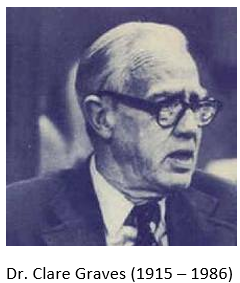
The Graves model and Spiral Dynamics™ is the result of over 40 years of research and development of Dr. Clare Graves and further work by Don Beck and Chris Cowan, based on their work in North America and South Africa.
People and cultures go through different stages of development. These stages are colour coded in Spiral Dynamics to make it easier to keep track. These stages of development or memes are different modes of being in people and under the right conditions, changes happen to move them to another mode of being.
Spiral Dynamics offers several valuable applications for social workers, particularly in South Africa’s complex social context. The model provides a framework for understanding how individuals and communities develop different value systems and worldviews based on their life conditions and psychological capacities.
Spiral dynamics help describe the development of people, organizations, and wider society according to the value systems that motivate them. Social workers can use this to better understand why different communities respond differently to interventions and social programmes.
The Spiral Dynamics model has a variety of applications in the fields of personal growth and development, understanding social and cultural dynamics, leadership development, conflict resolution, and reconciliation. This is particularly relevant in South Africa’s post-apartheid context where communities are still healing from historical trauma.
What Spiral Dynamics Offers Social Workers
For South African social workers, Spiral Dynamics can help:
- Navigate the diverse cultural landscape by understanding different value systems without judgment
- Address intergenerational trauma by recognizing how historical conditions shape current worldviews
- Design community development programs that meet people where they are developmentally
- Facilitate dialogue between communities operating from different value systems
- Support leaders in understanding the complexity of social change in post-apartheid society
The model’s emphasis on understanding rather than judging different worldviews makes it particularly valuable for social workers operating in South Africa’s multicultural environment, where traditional, modern, and post-modern value systems often coexist within the same communities.
Spiral Dynamics itself is a rather complicated theory, and variations of its core concepts has developed over time. The goal of this workshop is not to teach Spiral Dynamics per se, but the integration of foundational Spiral Dynamics principles into a pragmatic framework which social workers can use to broaden their understanding of the role value systems play as motivation for people’s behaviour, and especially to introduce social workers to a new way of thinking about how change happens for people. Spiral Dynamics is reimagined as a Worldview Map, which provides a unique perspective on “change”, the conditions necessary for change, and the concept of change as vertical or horizontal along the values spiral. This understanding alone can create a significant shift in the social workers thinking about how to plan interventions for the client.
WHAT YOU WILL LEARN IN THIS WORKSHOP
Overview of Workshop Content
The emphasis of the workshop is to explore the practical application of basic principles of values mapping, using Spiral Dynamics as the foundational framework. The focus is on a minimal use of theory and maximum exploration of application through many examples, discussions and case studies.
| Self-Assessment of Worldview Map | Participants map their own value systems on the worldview map to understand where they fit into the Spiral and which values really motivate their behaviour. |
| Foundational Principles of Spiral Dynamics | A brief exploration of the Spiral Dynamics theory, including an overview of the Spiral map, levels of development, values systems and its relation to environmental conditions, and conditions that motivate change. Each of the developmental levels are explored in greater depth. |
| Identifying Value Systems | An exploration of how value systems can be identified in individuals or in the world around us, with practical examples and discussion. |
| Conditions for Change | Change is viewed somewhat different from a Spiral Dynamics perspective. In this section, the participants explore variations of change, degrees of change and the conditions necessary for change to happen. |
| Assessment | An understanding of value systems and their development adds additional depth to assessment, whether it explores individuals, organisations or communities. This understanding provides for unique considerations when developing action plans for client systems. |
Logistics and Investment
Format: Online (Zoom)
Duration: 2 half-days (9h00 – 12h00)
Next Dates:
- Wednesday, 1 July 2026: 13h00 – 16h00
- Thursday, 2 July 2026: 13h00 – 16h00
CPD Points: 6 Points (SACSSP)
Workshop Includes: Workshop Notes, CPD Certificate
Investment: R550 (Introductory Offer for this Workshop Only)
Technical Requirements:
The workshop is facilitated fully online via Zoom. Participants are required to remain on camera for the full duration of each session and should ensure that their equipment and internet connection is suitable for this kind of interaction. Attendance with a phone or tablet isnot recommended – it is recommended to use a PC or laptop since some of the screens that will be shared may include text or diagrams that would be too small to read on a cellphone screen. It is recommended that each participant should attend from a suitable physical space (for example, not while travelling or while sharing office space with others). The use of headphones is recommended – alternatively participants should be in a space not shared with others. It is not ideal for participants to share a device, since it will limit their interaction and participation.
Your Facilitator
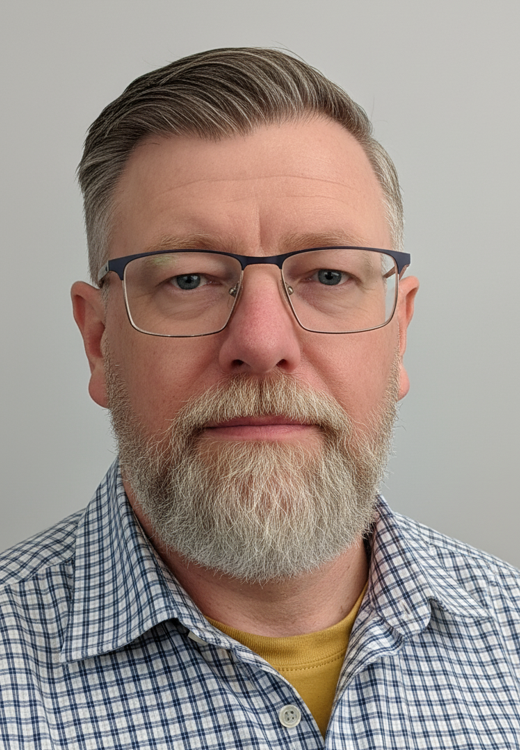
Werner is a Clinical Social Worker registered with the South African Council for Social Service Professions (SACSSP). He offers counselling, consulting and training – with a focus on meaningful, evidence-informed therapeutic work delivered entirely online.
His approach is relational and strengths-based – meeting clients where they are, and helping them build the insight and resources to move forward. His interest in Spiral Dynamics started when he trained as a Master Practitioner in Neuro Linguistic Programming, an impactful approach to coaching in which Spiral Dynamics is often used.
Werner holds master’s degrees in both Psychology and Clinical Social Work, is registered as a Clinical Social Worker with SACSSP and SAASWIPP, and trained in EMDR, NLP and Hypnotherapy.
He brings over 30 years of practice experience to his engagement with clients, and has authored numerous articles, book chapters, and published a book on Building Resilience in Children.
Workshop Terms & Conditions
Please review the Workshop Terms and Conditions:
Frequently Asked Questions
How can Spiral Dynamics be useful to social workers in South Africa?
Grave’s original research was small-scale and never replicated at scale, but has especially found support in the world of business and leadership. It is not a traditional, social work-specific evidence-based model, and this workshop therefore focuses on Spiral Dynamics as a reflective tool to broaden thinking about value diversity, and not as a specific assesment or intervention guide. It is particularly valuable in helping practitioners reflect on the mismatches between their own worldview and a client’s. Some community development and organisational change practitioners find the group-level lens helpful for understanding cultural dynamics. Given the historical connection between Graves’ work and South Africa, this model is worth exploring. In this workshop, it is presented as an alternative view to broaden understanding of how worldviews develop and drive people’s behaviour, individually and in groups. The workshop follows some of the implications of Spiral Dynamics to add additional insights to assessment and intervention planning for the open-minded practitioner who can explore alternative perspectives without compromising their evidence-based practices. It is therefore not a workshop in Spiral Dynamics per se, but an exploring of how some of the concepts of Spiral Dynamics can help practitioners reflect on their current practices and assumptions and provide a creative base from which to explore alternative perspectives.