
Groups that Work
Facilitating Therapeutic Groups
From First Session to Dealing with
Difficult Moments
7, 8 & 9 December 2026
9h00 – 13h00
Practical, Relational Group Work for Social Workers
Many social workers are expected to run groups. Far fewer were ever given the chance to learn groupwork properly, beyond a module at university. The result is familiar: groups that feel like a lecture, a few members who do all the talking, and a sinking feeling when someone discloses something serious and the whole room goes quiet.
This workshop is for social workers who want to facilitate groups with more confidence and more intention, from the first five minutes of a new group to the moments facilitators find hardest.
Why groups, and why now?
Groups are sometimes treated as a second-best option, a way to see more people when there isn’t time for individual work. The research does not support that view. A 25-year meta-analysis found that when the same treatment is offered to similar clients at the same dose, group and individual formats produce equivalent outcomes (Burlingame et al., 2016). In South Africa, members of groups run by social service agencies in Gauteng described them as empowering, reporting support, less isolation and more confidence, yet the researchers concluded that social workers under-use groupwork (Rasool & Ross, 2017).
The evidence comes with a caution: it applies to well-planned groups led by skilled facilitators. A poorly prepared group can do harm. Members drop out, feel exposed or get hurt by other members. A good programme manual helps, but it does not run the group for you.
At the same time, the demands on social workers have grown:
- Many statutory, diversion, parenting and prevention programmes are delivered in groups, often with members who are mandated to attend.
- Since 2020, online and hybrid groups have become part of everyday practice, with their own risks around privacy, safety and WhatsApp groups.
- Social workers are responsible for supervising social auxiliary workers and others who run groups, which requires a sound understanding of group dynamics, design and risk.
Who is this Workshop for?
The workshop is designed for registered social workers in South Africa who:
- facilitate groups of any kind, such as support, psychoeducational, skills, statutory or therapeutic groups;
- are planning to start a group and want to design it well;
- run structured programmes (for example diversion or parenting programmes) and want to facilitate them with more skill;
- supervise social auxiliary workers or others who run groups.
You do not need extensive groupwork experience. Experienced facilitators will also find plenty to work with, especially in the sessions on therapeutic groups and difficult moments.
Workshop Details
Format: Online (Zoom)
Duration: 3 half days (9h00 – 12h00)
Next Dates:
- 7 December 2026: 9h00 – 13h00
- 8 December 2026: 9h00 – 13h00
- 9 December 2026: 9h00 – 12h00
CPD Points: Application made with SACSSP, awaiting final result
Investment: R750 per person
What is included: CPD points, Workshop Manual and CPD Certificate
Technical Requirements:
Participants are required to remain on camera for the full duration of each session, so please make sure your equipment and internet connection are suitable. A PC or laptop is recommended rather than a phone or tablet, as some shared screens include text and diagrams that are too small to read on a phone. To keep the space confidential for everyone, please attend from a private space (not while travelling or sharing an office), and use headphones where possible. To protect participants’ privacy, sessions are not recorded.
R750 per person
Click to make immediate payment online and complete registration form once payment is made
You are immediately registered and your place is secure – no need to take further action. You will receive confirmation and details within 24 hours. You can still request an invoice for your records.
R750 per person
Click to complete registration form.
You will receive an invoice with banking details within 24 hours. Make EFT payment and send proof of payment.
Registration places you on the list, but payment secures your seat. Take this option if Payfast does not work for you, but it takes a few days longer and you need to send proof of payment to finalise your registration.
Your Facilitator
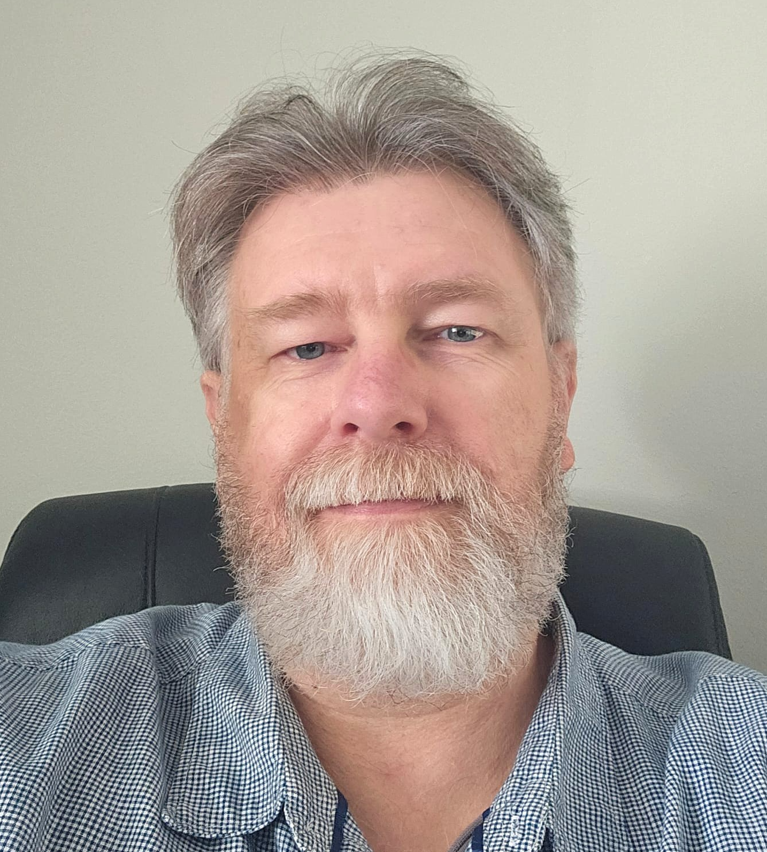
Werner van der Westhuizen is a clinical social worker in private practice in Gqeberha (SACSSP 10-17492). He holds master’s degrees in psychology and in clinical social work, and is a certified hypnotherapist. His work is grounded in a relational approach to helping, and he presents a range of SACSSP-accredited CPD workshops for social workers, including Crisis Intervention, Suicide Assessment and Intervention, and Practical Trauma Support.
He has developed and facilitated groups for clients in trouble with the law, both adolescents and adults, as well as personal growth and therapeutic groups for clients in emotional crisis.
He is the author of the book Building Resilience in Children.
What the Workshop Covers
The workshop is built in three tiers, one per session. Each builds on the one before.
Session 1: Facilitating any group well
The foundations that apply to every kind of group, from a parenting programme to a therapy group.
- Why groups work: the evidence, and the therapeutic factors that make groups helpful
- Group dynamics and the stages of group development
- Hosting versus facilitating: the difference between running a group and leading it
- Core facilitation skills: drawing out, cutting off, linking, and holding and shifting focus
- Opening a group well, so members feel safe from the first minutes
- Agreements, safety and the limits of confidentiality in a group
Session 2: Designing therapeutic groups
How a group becomes a place where people change, and how to plan one.
- The group as the vehicle of change: cohesion and a relational approach
- Process-focused or structured groups: when each fits, and why a manual alone is not enough
- Planning a group: purpose, goals, composition, screening, structure, session plans and evaluation
- Exercises with a purpose: choosing them, introducing them and processing them
- Trauma-informed groupwork: creating safety, grounding and managing triggers
- Online and hybrid groups: privacy, platforms and WhatsApp groups
Session 3: When groups get difficult
The moments facilitators find hardest, and a framework for responding to them.
- A five-step framework for difficult moments, with a graded approach from least to most intrusive interventions
- Common challenges: the silent group, the dominant member, conflict between members, scapegoating, the hostile mandated member, and co-facilitators who disagree
- Rupture and repair in groups
- Disclosures and crises: responding to abuse, suicidal thoughts and acute distress, while caring for the rest of the group
- Reporting duties under South African law, including section 110 of the Children’s Act
- Ethical dilemmas: informed consent of mandated members, dual relationships, power and cultural humility, and supervising others who facilitate groups
Frequently Asked Questions
I have never run a group. Is this workshop too advanced for me?
No. Session 1 starts with the foundations, and the skills practice is set up so that you can take part at your own level. Sessions 2 and 3 go deeper, but everything builds on what comes before.
I mainly run structured programmes from a manual. Is this relevant to me?
Yes. The workshop covers both process-focused and structured groups. Much of what makes a structured programme work, such as opening well, managing dynamics, processing exercises and handling difficult moments, depends on facilitation skills rather than on the manual.
Will this qualify me to run therapy groups?
The workshop gives you a sound foundation in therapeutic groupwork, but facilitating therapy groups safely also requires training in your therapeutic approach, experience and supervision. The workshop will help you judge which groups are within your current competence.
Can social auxiliary workers attend?
The workshop is designed for registered social workers, and CPD accreditation has been applied for social workers. Much of the content of the workshop may be very valuable for social workers who supervise social auxiliary workers who run educational or support groups.
Can I attend only some of the sessions?
The three sessions build on one another, and attendance of all three is required for CPD points.
Will the sessions be recorded?
No. To protect participants’ privacy, sessions are not recorded.